Contents:
- What Makes a Flower “Luxury” in the First Place
- The Growing Timeline Is Punishing
- The Bloom Window Is Brutally Short
- Harvest and Handling Are Unforgiving
- Cultural Weight Multiplies Perceived Value
- A Personal Illustration of the Value
- The Sustainability Angle: Are Peonies Eco-Friendly?
- When Peonies Are Worth Every Dollar — and When They’re Not
- Frequently Asked Questions
- Why are peonies so much more expensive than other flowers at the florist?
- Are peonies worth the price for a wedding?
- Do peonies really only bloom once a year?
- How can I make peonies last longer after buying them?
- Are there any peony alternatives that give a similar look at a lower price?
- The Honest Case for Paying More
If you’ve ever stood in front of a flower shop, spotted a bucket of peonies, and quietly winced at the price — you’re not alone. For a flower that looks like it could have tumbled out of a fairytale, the cost can feel wildly out of proportion to its size. That reaction is understandable. But there’s a reason professionals charge what they do for peonies, and once you understand the biology and logistics behind the bloom, the price starts to make a different kind of sense.
The short answer: peonies are considered luxury flowers because they are genuinely difficult to grow at scale, available for only a narrow window each year, labor-intensive to harvest and handle, and deeply tied to cultural traditions around celebration and abundance that reinforce their perceived value. Every one of those factors compounds the others.
What Makes a Flower “Luxury” in the First Place
The cut flower industry has a fairly consistent framework for what earns a bloom premium status. Rarity plays a role — but rarity alone isn’t enough. Orchids are rare, but commodity orchids have been industrialized to the point where grocery store prices are common. True luxury status in floristry comes from a combination of factors: scarcity relative to demand, visual and sensory impact, difficulty of production, and cultural weight.
Peonies check every one of those boxes in a way that few other flowers do. A garden rose can be produced year-round through controlled greenhouse growing. Tulips can be manipulated with cold treatment to bloom almost any month. Peonies resist most of those interventions. They bloom when they’re ready, in the conditions they prefer, and not much earlier or later — no matter how much a grower might wish otherwise.
The Growing Timeline Is Punishing
A peony plant doesn’t bloom in its first year. Or its second. Most growers accept that a newly planted peony crown takes three to five years before it produces flowers of commercial quality and quantity. During those years, the farm is investing in land, labor, water, and nutrients with essentially no revenue from that crop.
Compare that to a standard cut flower like a sunflower or alstroemeria, which can go from seed or cutting to harvestable bloom in weeks or a few months. The peony’s multi-year runway before first revenue means growers need to price their product to recover costs that accumulated over half a decade. That extended investment is baked directly into what you pay at the counter.
Once established, peony plants can live and produce for decades — some documented plants in historic gardens are over 100 years old. But the sheer patience required to get there filters out producers who can’t absorb the upfront cost. That filtering effect keeps overall supply constrained relative to a flower crop with faster returns.
The Bloom Window Is Brutally Short
In North America, the peak outdoor peony season runs roughly from late April through June, varying by growing zone. That’s approximately six to eight weeks in a typical year. For a flower with the cultural footprint peonies carry — weddings, Mother’s Day, spring celebrations, anniversary gifts — the demand in that window is intense, and supply simply cannot expand on short notice to meet it.
When demand spikes and supply is fixed, prices rise. That’s economics, not florist markup strategy. During the heart of peony season, even wholesale prices reflect the pressure of limited supply. Outside that window, peonies sourced from Chile, New Zealand, or Alaska (where the growing calendar shifts) are available — but at even higher cost, because air freight from the Southern Hemisphere adds significantly to the price per stem.
This seasonality also means that peonies carry an irreplaceable scarcity signal. When you receive peonies, the recipient often knows, at some level, that timing and effort went into sourcing them. That implicit message is part of what makes them feel luxurious rather than routine.
Harvest and Handling Are Unforgiving
Cutting a peony at the right moment requires genuine skill. The bloom must be harvested at a very specific stage — what professionals call the “marshmallow stage,” when the bud has developed color and softened slightly but has not yet begun to open. Harvest too early and the bud won’t open in a vase. Harvest too late and the flower opens too quickly, dropping petals within a day or two of delivery.
That precision requirement means peonies cannot be harvested efficiently by machine. Every stem is assessed and cut by hand, in the field, by workers who know what they’re looking for. In a commercial operation handling thousands of stems per day during peak season, that labor cost is significant.
Post-harvest, peonies require cold storage at specific temperatures to slow their development without chilling injury. Getting that balance wrong — too warm and they open prematurely, too cold and they suffer cellular damage — means losing entire batches. The margin for error is smaller than with many other cut flower species, which further raises the cost per successfully delivered stem.
When professional florists and event designers order peonies, they almost always request “tight bud” stems — flowers at the marshmallow stage — rather than partially open blooms. Tight buds ship better, bruise less, and give the buyer control over when the flower opens. A warm room speeds opening; a cool room slows it. This means a skilled florist can time peony blooms to peak on the exact day of a wedding or event. If you’re ordering peonies delivery for a specific occasion, request tight buds and allow two to three days of room-temperature opening time for the fullest, most dramatic bloom.
Cultural Weight Multiplies Perceived Value
Flowers gain luxury status not just through biology and economics, but through accumulated cultural meaning. Peonies have been cultivated in China for over 2,000 years, where they carry associations with wealth, honor, and feminine beauty. In Chinese imperial culture, the peony was literally called the “king of flowers.” That symbolic weight traveled through centuries of art, poetry, embroidery, and ceremony before it ever reached a modern florist’s display case.
In Western tradition, peonies became firmly associated with the extravagance of formal gardens, country estates, and wedding celebrations. Their association with romantic abundance — those enormous, layered blooms — made them a natural choice for bridal flowers, and that wedding connection feeds back into their luxury status every time a couple allocates a significant portion of their floral budget to securing enough stems for the big day.
Cultural associations are not superficial to pricing. When a flower carries generations of meaning tied to celebration and abundance, demand for it on exactly those high-stakes occasions becomes inelastic — buyers pay the price because there isn’t an adequate substitute that carries the same message.
A Personal Illustration of the Value
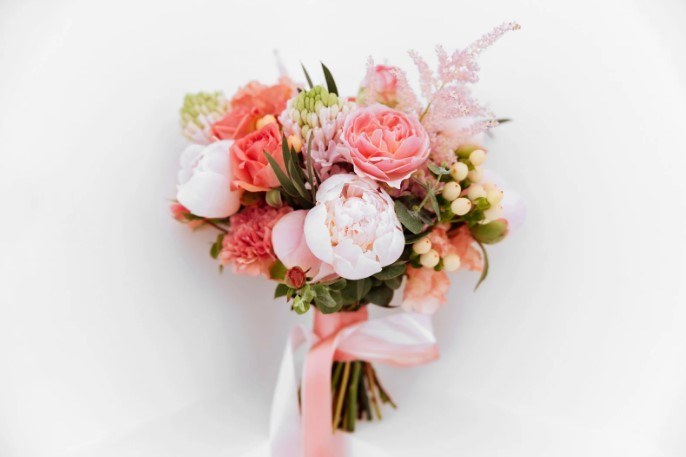
A friend who runs a small wedding planning business in Southern California tells a story that captures this dynamic well. A couple she worked with had budgeted carefully for everything except flowers, which they’d left somewhat open. When they came in for their consultation in early March, they saw peonies in a reference photo and immediately wanted them for their June wedding.
Her job was to explain that June was the very tail end of domestic peony season, which meant sourcing would require early booking with a specific grower and a price per stem that surprised them. They almost switched to garden roses. But when she brought in a sample bouquet of fully open peonies to the next meeting — those enormous, bowl-shaped blooms filling the space with a soft, complex fragrance — the conversation was over. They kept the peonies. The couple later told her the flowers were the detail guests mentioned most at the reception.
That story illustrates something real about luxury flowers: the experience of peonies in person consistently exceeds expectations in a way that photographs can only partially capture. That experiential quality, reliably delivered, is part of what justifies the premium.
The Sustainability Angle: Are Peonies Eco-Friendly?
Peonies have a surprisingly favorable environmental profile compared to many luxury cut flowers. Established peony plants require minimal inputs once they’re growing well. They’re perennials — they don’t need to be replanted annually, which eliminates the soil disturbance, peat use, and seedling production costs associated with annual crops. Many growers use minimal pesticides on field-grown peonies because the plants develop natural resilience over their long lives.
Domestic peonies sourced from farms in Oregon, Alaska, Michigan, and the Pacific Northwest arrive without the air freight carbon load associated with tropical luxury flowers like orchids flown from Thailand or anthuriums from Hawaii. A locally sourced peony in season is, by most metrics, a lower-carbon luxury purchase than a year-round alternative shipped from the other hemisphere.
For buyers who care about sustainability without abandoning quality, buying peonies in season from domestic growers — or ordering from retailers who disclose their sourcing — is a way to get the full luxury experience with a lighter footprint. The https://thescarletflower.com/ team sources with supply chain transparency in mind, which matters for buyers who want to know where their flowers came from before they arrived at the door.
When Peonies Are Worth Every Dollar — and When They’re Not
Luxury pricing is only defensible when the product delivers on its promise. Peonies purchased at peak season from a supplier with fast turnover and proper cold chain handling absolutely deliver. The bloom size, fragrance, and visual impact are unmatched by any comparably priced flower. The vase life — typically seven to ten days for properly handled buds opened at room temperature — is more than adequate for the price point.
Peonies purchased out of season from a supplier with poor sourcing practices are a different story. An off-season peony that has traveled days by air freight and sat in inadequate storage can disappoint significantly: tight buds that never open, stems that collapse early, or no fragrance at all. The luxury experience depends heavily on the supply chain, not just the flower itself.
That’s why sourcing matters as much as the bloom itself. Buyers in Southern California can explore local seasonal availability at https://thescarletflower.com/pages/anaheim, where same-region sourcing dramatically reduces transit time and improves the odds of getting peonies at their actual peak.
Frequently Asked Questions
Why are peonies so much more expensive than other flowers at the florist?
The price reflects several compounding factors: a three-to-five year establishment period before any commercial harvest, a very short domestic growing season of six to eight weeks, hand-harvest requirements that can’t be mechanized, and precise cold chain handling that has a narrow margin for error. Each of these adds cost at a different point in the supply chain, and they all arrive in the final price per stem. During off-season months, add international air freight from Southern Hemisphere growers and the price climbs further.
Are peonies worth the price for a wedding?
For most couples who prioritize visual and sensory impact in their floral design, peonies deliver a return on investment that few other flowers can match. The bloom size means fewer stems achieve a fuller look. The fragrance adds a dimension that photographs can’t capture but guests remember. The cultural association with romantic celebration is one of the strongest of any flower available. The main caveat is timing: scheduling a wedding during domestic peony season (late April through June in most of the continental U.S.) gives you the best quality at the lowest relative price.
Do peonies really only bloom once a year?
For most traditional herbaceous and tree peony varieties, yes — they bloom once per season, typically for two to four weeks per plant. Some hybrid Itoh peonies (also called intersectional peonies) have a slightly extended bloom period and may rebloom under favorable conditions, but they’re not reliably repeat-blooming the way some roses or dahlias are. This single-annual-bloom habit is one of the key biological factors that keeps supply constrained and prices elevated.
How can I make peonies last longer after buying them?
Re-cut the stems at a 45-degree angle immediately, strip any foliage below the waterline, and place them in cool clean water with floral preservative. Keep them away from direct sun, heat vents, and ripening fruit. Change the water every two days. If the buds are very tight when you receive them, room temperature and indirect light will encourage opening; if they’re already partially open and you want to slow development, a cooler room or brief refrigerator storage at night will extend their peak by a day or two.
Are there any peony alternatives that give a similar look at a lower price?
Garden roses — particularly David Austin varieties with their dense, layered petal structure — come closest in visual profile to a fully open peony. Ranunculus at full bloom also mimics the multi-layered quality at a smaller scale. Neither has the fragrance profile or raw size of a large peony bloom, but both are available year-round and carry a similar romantic aesthetic. For buyers who want peonies specifically, there’s no true substitute; for buyers who want the general mood peonies create, these alternatives are legitimate and significantly more budget-friendly outside of peony season.
The Honest Case for Paying More
Luxury flower pricing is sometimes theater — a markup added because a market will bear it, not because the product earns it. Peonies are not that. The price reflects a genuine accumulation of agricultural patience, precise logistical handling, and biological constraints that no amount of market pressure can easily shortcut. The growing timeline cannot be rushed. The bloom window cannot be extended on demand. The hand-harvest requirement cannot be automated away.
What you’re paying for when you buy peonies is not just a flower. You’re paying for the years that preceded the bloom, the expertise of the people who timed the harvest, the cold chain discipline that got the bud to you before it opened, and the cultural weight of a flower that has meant something extraordinary to human beings across multiple continents for millennia. That’s a different kind of value calculation than the one you make for a grocery store mixed bouquet — and for buyers who understand it, peonies consistently justify every dollar.